
Summary
Independent living cost savings often surprise people when you compare your actual yearly home expenses, like property taxes, utilities, repairs, and maintenance, against a predictable monthly community fee. This approach reveals how shifting from homeownership to renting can free up thousands annually while reducing financial stress.
- Eliminate thousands in annual maintenance and repair costs by transferring home upkeep responsibilities to the community.
- Consolidate multiple utility, service, and household bills into one predictable monthly payment for easier budgeting.
- Access included services like chef-prepared meals, housekeeping, transportation, and programs that would otherwise require separate payments.
- Remove property tax and homeowners insurance expenses. Renters insurance typically costs significantly less.
- Avoid major capital expenditures like roof replacements, HVAC systems, and electrical updates that can reach tens of thousands of dollars.
If the monthly fee is the reason you haven’t considered Independent Living with supportive services**, try this simple exercise first.
Add up what your house actually costs in a year: property taxes, insurance, utilities, yard work, and the repair that always seems to show up at the worst possible time. Then, compare it to what you'll spend in a senior living community. Once those numbers sit side by side, the independent living cost savings often surprise people.
1. Eliminate Home Maintenance & Repair Costs
A house keeps asking for money long after the mortgage is paid off. Mowing, heating and air conditioning service, gutter cleaning, roof patches, and the occasional plumber can add up to thousands of dollars a year, and those bills don't always follow a predictable schedule.
In an independent living apartment home, those jobs belong to someone else. Maintenance is handled for you, inside and out, so a failing water heater or a few loose shingles stop being line items in your budget.
That's one of the simplest ways to save money in independent living. It also brings something that’s hard to put a price on: The ability to stop bracing and saving for the next repair.
2. Consolidate Multiple Bills Into One Predictable Payment
Running a household means keeping track of a stack of separate bills, and many of them can change with the seasons. A typical month might include:
- Electric, gas, and water.
- Trash collection.
- Internet and cable.
- Homeowners association fees.
Independent living folds much of that day-to-day spending into one monthly fee, so you budget around a single, predictable number instead of watching several accounts. When you weigh independent living vs. home costs, that predictability matters almost as much as the dollars themselves, especially on a fixed income.
3. Access Included Services That Replace Outside Expenses
Staying in a house often means paying a different person for every task you’d rather not handle: a housekeeper, a lawn service, rides once driving loses its appeal, and more takeout than you planned. Over time, that list tends to grow.
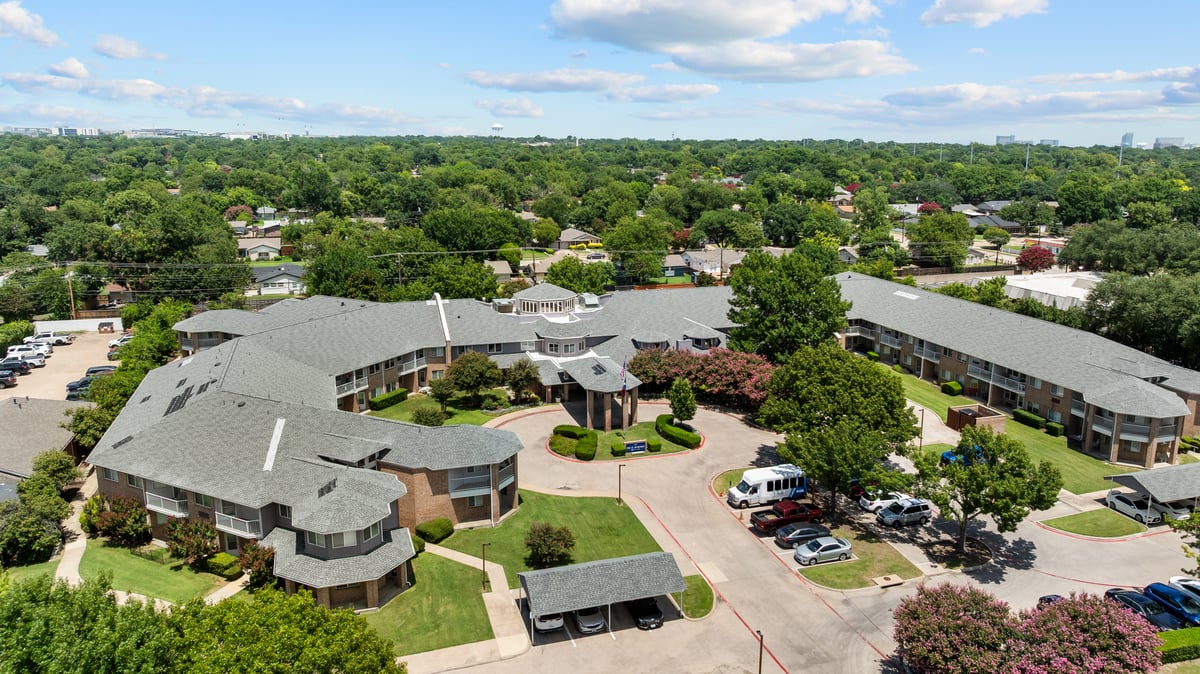
At The El Dorado, an Independent Living with supportive services** community in Richardson, TX, many of those services are already part of daily life:
- Three chef-prepared meals each day, with seasonal menus shaped by resident input.
- Worry-free housekeeping and maintenance.
- Health & Fitness programming.
- Complimentary scheduled transportation for local appointments, errands, and trips.
- Daily programs and events.
Price these out one by one, and it’s easy to see what makes this a money-saving senior living option. If you served in the military, ask about the exclusive savings available through our Veterans Program.
Our Independent Living with supportive services** community is designed to support your independence while offering access to additional help—only when and if you want it. A choice of third-party providers is available onsite for your convenience, but you are under no obligation to use any particular one. This flexible approach is perfect for individuals or couples with varied needs. Extend your independent lifestyle by choosing to make our community your home.
4. Reduce Property Taxes & Insurance Premiums
Property taxes are one of the highest fixed costs of owning a home, and Texas homeowners know how quickly that bill can climb. Add homeowners insurance, which tends to rise as a house ages, and the two can take a real bite out of retirement income.
As a renter, you no longer receive a property tax bill. You’ll typically carry renters insurance for your personal belongings, while the community insures the building itself. For most people, that costs far less than full homeowners coverage.
These are some of the clearest financial benefits of senior living, and they repeat every single year. The money you free up can go toward travel, visits with grandchildren, or simply more breathing room each month.
5. Avoid Major Capital Expenditures
Then. there are the big-ticket repairs. A new roof, a replacement heating and air conditioning system, foundation work, or updated electrical wiring can each cost thousands, and some reach tens of thousands of dollars. They rarely come with much warning.
Independent living residents don’t carry these expenses. The community is responsible for building systems, structural repairs, and infrastructure updates, so when the roof needs attention, you simply go on with your week.
That kind of stability is hard to match as a homeowner, and it’s often the deciding factor when people sit down for an honest cost comparison of independent living and staying put.
See How the Numbers Compare at The El Dorado
The El Dorado offers Independent Living with supportive services** with predictable monthly costs, chef-prepared meals, and the freedom to spend your time and money on what you enjoy. Bring your current housing expenses along, and our team will walk through a side-by-side comparison with you. Schedule a personalized tour to see how life here can mean a more predictable budget in a welcoming community.
A choice of third-party providers is available onsite for convenience, but residents are under no obligation to use any particular one.